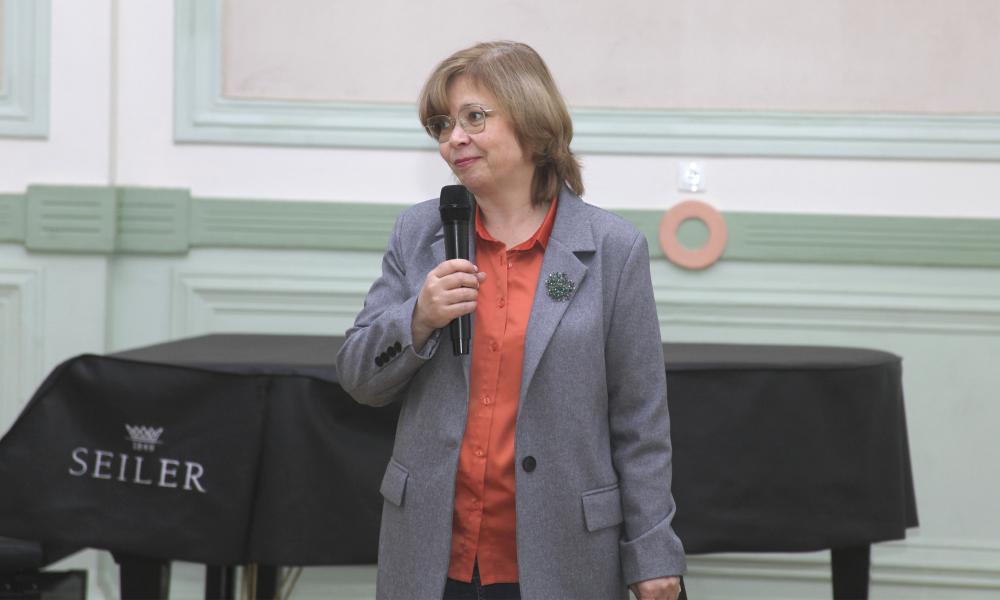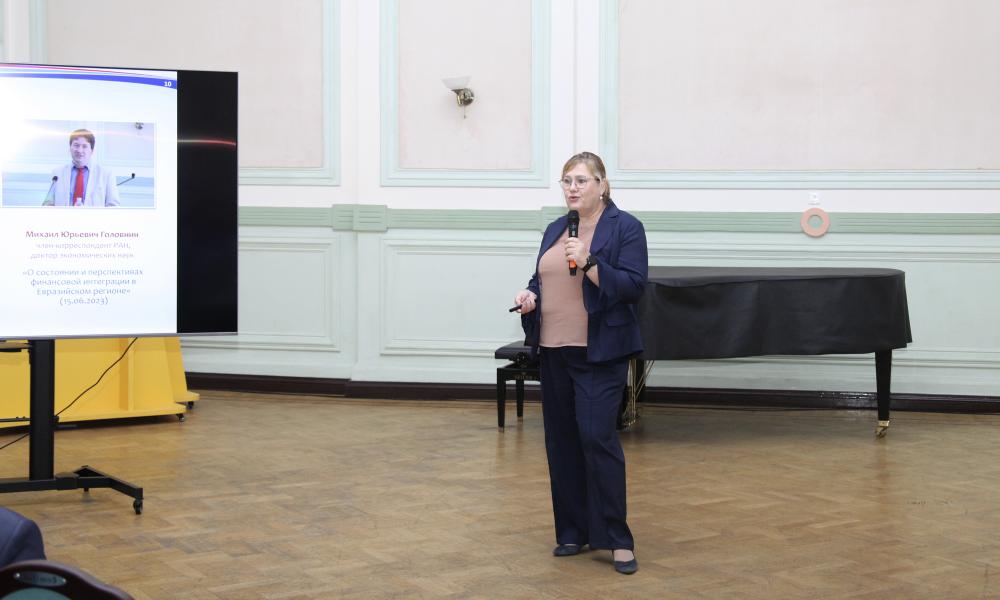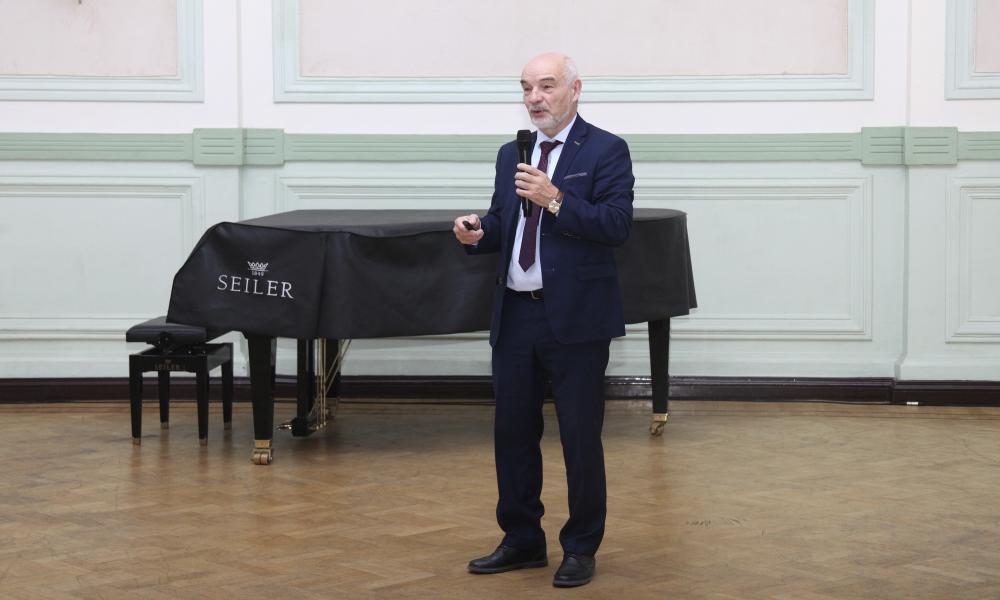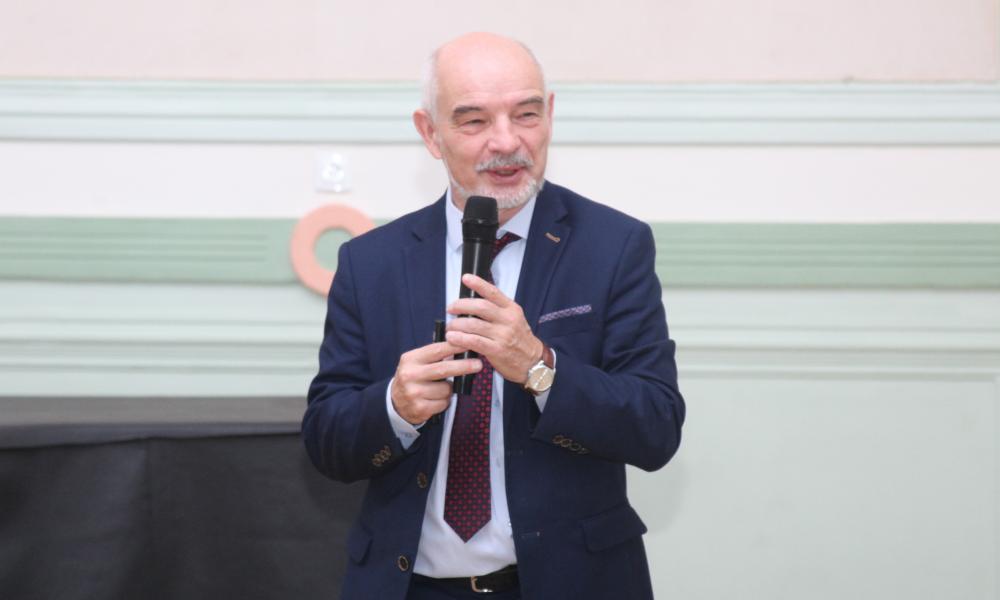
During his speech, the lecturer outlined as the main goal of the country's economic development a steady increase in the standard and quality of life of the population. According to D.B. Kuvalin, in order to achieve this goal, it is necessary to ensure high growth rates of the national economy, support investment and modernization activity, as well as develop the national financial system.
A significant part of the lecture was devoted to the analysis of the causes of low economic growth in Russia. Among them are the technological lag in a number of sectors, the shortage of skilled labor and institutional problems, large–scale anti-Russian sanctions from Western countries and the tightening of domestic macro-financial policies.
A separate section of the speech was devoted to the role of inflation in the economy. Among the negative effects of inflation were: a decrease in the standard of living of people with fixed incomes (state employees, pensioners), the Cantillon effect, and an increase in economic uncertainty leading to a drop in investment activity. At the same time, inflation can act as a built-in mechanism that effectively solves the structural problems of the economy and eliminates deficits. The lecturer also touched upon the concept of the "natural inflation rate", noting that it can vary greatly in different circumstances.
Summing up, the lecturer stressed that the search for a balance between macro-financial stability and economic growth remains one of the key topics of discussion on the modern economic agenda.
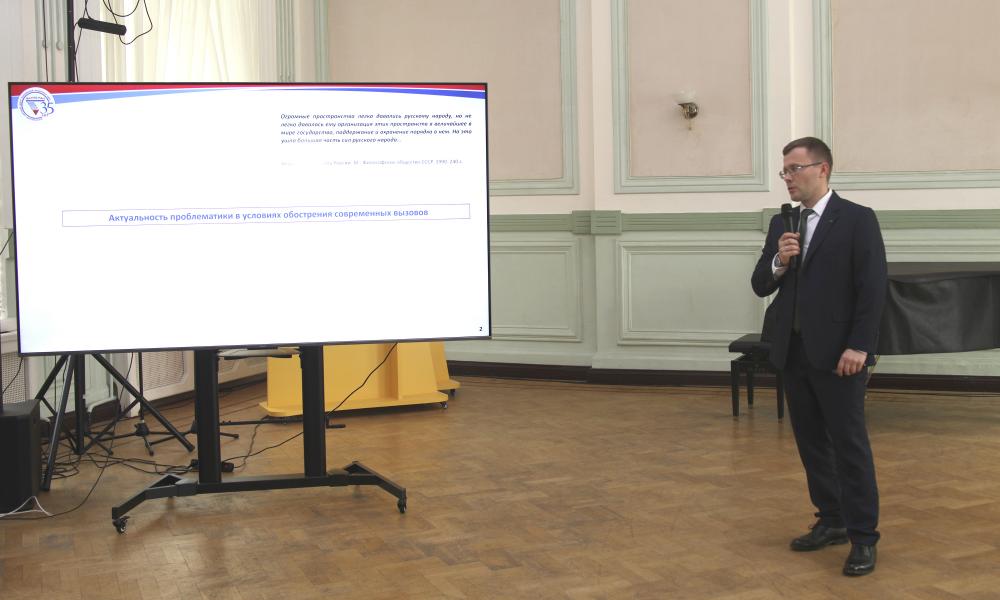
Within the framework of the event, S.A. Kozhevnikov, Doctor of Economics, Senior Researcher, Head of the Center for the Study of Spatial Development of Socio-economic Systems at the VolSC RAS, also delivered a co-report on the problems of spatial development in Russia. The focus turned to a key problem – the forced peripherization of the developed socio-economic space. Based on extensive statistical data and surveys of heads of enterprises in the Vologda Oblast, the processes of increasing interregional differentiation were demonstrated.
S.A. Kozhevnikov noted that poor infrastructure facilities and the presence of "gaps" in the transport infrastructure reduce the connectivity of the macroregion and limit the availability of key social services for the population. This, in turn, enhances the negative effects of peripherization. Measures to modernize the economy of the mainstays, develop infrastructure and institutional and legal regulation aimed at smoothing out imbalances were proposed as strategic priorities.
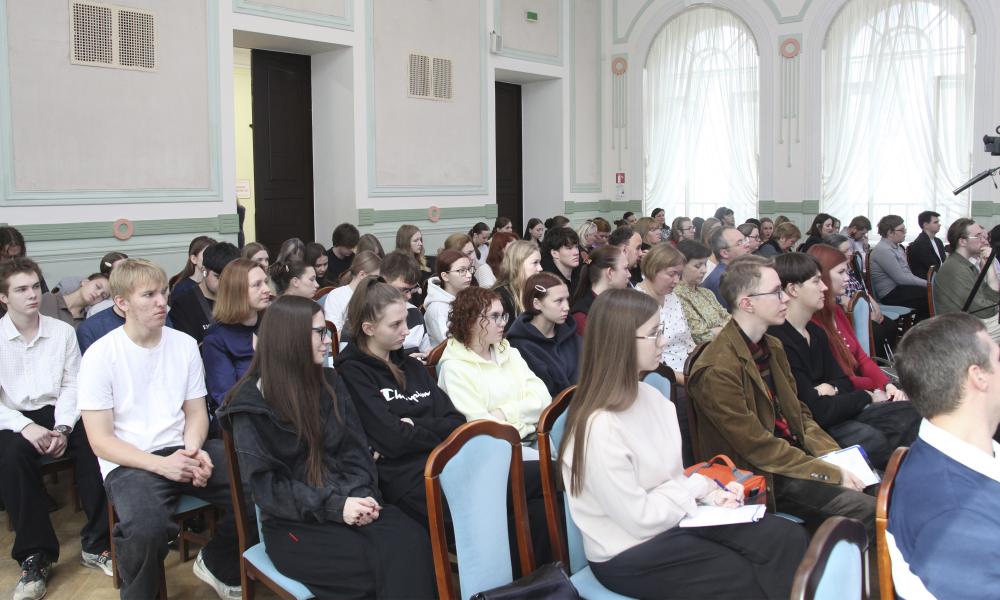
The lecture and co-report aroused great interest among the audience: after the presentations, the scientists answered questions from the audience regarding practical aspects of monetary policy, inflationary processes and prospects for the spatial development of the regions. The event has become an important platform for an open dialogue between academic science, the expert community and business within the framework of the All-Russian Forum.
Public lectures have become a tradition of scientific conferences organized by the VolSC RAS. The first such lecture took place in 2013, and since then more than 30 presentations have been held. During this time, leading Russian and foreign scientists addressed the participants of the events – Peter Ouy, PhD, sociologist Antonius Schroeder, academicians of the Russian Academy of Sciences M.K. Gorshkov, P.A. Minakir, V.M. Polterovich, A.G. Aganbegyan, V.A. Kryukov, corresponding members of the Russian Academy of Sciences R.S. Grinberg, M.Y. Golovnin, A.A. Shirov, S.D. Bodrunov, V.A. Ilyin.