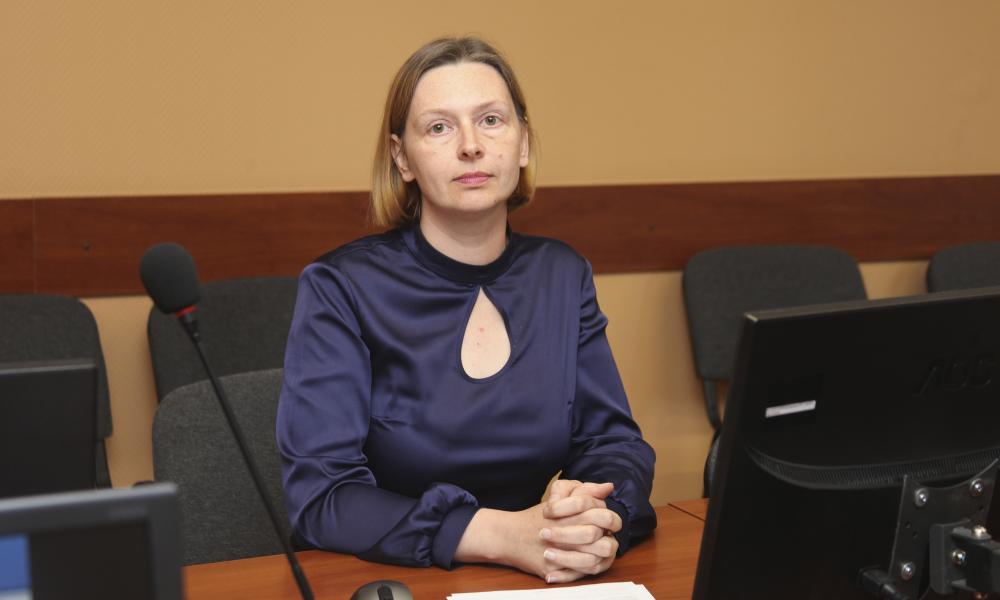
The report was devoted to identifying trends in the development of the manufacturing sector of the economy of the North-Western Federal District. The study documented the transition from an emergency replacement of suppliers to a strategic restructuring of supply chains.
The methodological and informational basis of the study were expert targeted surveys conducted in April-May 2022-2026. The heads of large and medium-sized enterprises of the Northwestern Federal District operating in the main industries: ferrous metallurgy, electric power industry, timber industry, mechanical engineering and metalworking, food and light industry, fishing and fish farming acted as experts in monitoring the manufacturing sector of the economy of the North-West of Russia.
The author proves that the trend of stagnation prevails in the manufacturing sector of the economy of the North-West of Russia in 2022-2026. The adaptation took place only in a narrow sense: it was possible to partially replace imports and reorient flows to the domestic market. However, the price of this was a drop in profits and investment activity; critical wear and tear of equipment against the background of limited opportunities for its renewal (both due to sanctions restrictions on the supply of imported equipment and due to its high cost); chronic staff shortages and the exhaustion of the effect of government support measures.
The role of the high key rate as the main constraint is noted. At the same time, the attitude of business towards the Central Bank's policy has softened somewhat: 53% of managers consider it negative or rather negative, compared to 71% a year earlier. At the same time, the rate still directly constrains investment (42.4% call it a barrier) and strengthens business demand for preferential loans, which came out on top among the expected state support measures.
According to the survey results, there has been a change in requests to the state. While at the beginning of the period, business identified reducing the bureaucratic burden as one of the main measures (49-58%), by 2026 the main requests were creating conditions for investment and preferential lending (63%), simplifying taxation (56%) and improving the financial and credit system (50%). It is noted that requests for anti-corruption and import substitution have receded into the background.
The reviewers (Senior researcher, Candidate of Economics N.V. Voroshilov) and (senior researcher, Candidate of Economics K.E. Kosygina), as well as the expert (senior researcher, Candidate of Economics A.A. Sokolova), noted the relevance, content and scientific level of the research, identified its strengths and weaknesses, as well as They made valuable suggestions on the development of the scientific field.